Wednesday, July 28, 2010

Congrats to Natty Paint!


GHCC is thrilled to see local designer Emily Li Mandri - of Natty Paint fame - on the cover of today's Baltimore City Paper. The feature chronicles Emily's journey from teaching herself to silkscreen, to producing what has quickly become an established indie clothing label right here in Charm City.

"Most of my sales are happening in Baltimore," Emily says. "People like seeing something fashion-forward here and want to support me."

We count ourselves among these supporters, as Emily is who designed and printed some dazzling t-shirts (pictured above) for our 40 Trees in 40 Neighborhoods initiative.

So, in celebration of today's feature story, we're offering our 40 Trees tees at a special discounted rate of $15 for one week only! Each one is hand-printed by Emily herself on organic cotton with eco-friendly inks and can be purchased at our online store. All proceeds go towards our efforts to plant 1,600 trees by Spring 2011.

"I cannot believe I made the front page," says Emily. "It's a huge achievement for everyone involved in Natty Paint and myself. We've been working hard for one year to generate buzz about what we're doing and it's finally happening!"

To see more Natty Paint designs, visit http://www.nattypaint.com/.

Monday, July 19, 2010

Volunteers are Our Foundation

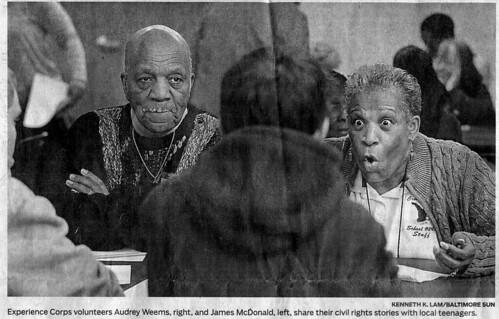
Today the Baltimore Sun ran a great op-ed piece on how GHCC, among others, utilizes national service and other volunteers in Baltimore City. Though the piece focuses on our Experience Corps program, whose members logged over 144,000 hours of volunteer service just last year, this is a great opportunity reflect on the volunteers of all kinds who have shared their experience on Greater Homewood Voices.


Baltimore Sun July Op-Ed
Photo courtesy of the Baltimore Sun
Thank you, volunteers!  We couldn't do it without you.


If you'd like to volunteer with GHCC, visit our volunteer page for current opportunities.

Monday, June 21, 2010

Reflecting on My Leader Year

Submitted by Kaleema B., outgoing VISTA Team Leader at GHCC

“What do you do all day? What does a VISTA Leader do?” My sister asked me when I began my VISTA Leader year at GHCC.  I stumbled through an answer of “well, you know," and “so many things, it is so complicated,” but truthfully, I was still unsure what to tell her.  I am a cog in a machine, I am an advocate, I lead? None of those expressions helped me define my position.

I mean, of course I had job description. However, these are sometimes intentionally ambiguous to allow the VISTA member to take ownership of the position. With all that fluidity, it is easy to get lost in Job Description Land, attempting to navigate on uncharted water. Yes, people have had my position before and they left a chart detailing where they went. This was somewhat helpful, but I would need to make the position mold to my personality and quirks. Then I attended VISTA Leader Pre-Service Orientation (PSO).

At PSO I was told I should find a role to play in my organization with our VISTA members. I told my moderator I was worried I wouldn't be the kind of leader my members needed. He told me I would make a perfect coach. 
“A coach?” I responded.  
He told me, “Think of all the Olympic athletes’ coaches. Do you think that their coaches are as talented as the athletes?” I tried to think of a coach who I could say was as gifted as the athlete in their sport, but I could not. 
My moderator responded, “be a coach. Bring the best out of the athletes by working with them and giving them advice and by sometimes just being an ear to listen to them.” 
I hope that I was a coach for my members. They are a group of highly talented individuals, all with their quirks and habits that I often found both endearing and irritating at the same time. As a coach, they pushed me to go beyond my limitations.
I still believe that no one starts out in the world already knowing how to read—they must first learn letters, and then words. We are constantly learning new roles each day. If you aren’t, then I suggest you take on something new so you will not get too comfortable in your role and forget how to learn something new. 

AmeriCorps*VISTA will always be a way for anyone to learn a new skill, trade, and way to look at the world around them. It is not an easy job, but learning something new never should be. I will now go on to a new adventure in which I will once again struggle to tell everyone what it is that I am doing and why, but I will do the best I possibly can. 

I would like to take a moment to thank everyone who supported me in this new endeavor, who allowed for me to make mistakes and helped me to learn from them. Good luck to the new group of VISTA members who will be taking over our positions next year. I hope you are ready to learn!

Wednesday, June 16, 2010

My Tribute to Mary: A Role Model of Persistence

Persistence is defined as “permanence by virtue of the power to resist stress or force; determination, resolution, pluck, stamina, grit, endurance, tenacity, diligence.”
This defines Mary. She was a strong senior citizen determined to get her education.

Enrolled at the Greater Homewood Adult Literacy & ESOL Program since 2008, Mary entered my Reading and Math Classes in September 2009. She worked hard until health issues forced her to take a break from classes. Diligent Mary continued to study at home for several months. We spoke by phone on a number of occasions.

Mary persevered and entered my Reading class in April. I felt the class was too long for her, so I negotiated to establish academic time on Mondays and Wednesdays for brief one-on-one sessions. She agreed! Whew! We met from mid-April to mid-May, until Mary was hospitalized.

She passed away on May 31. I went to her viewing and met her beautiful daughters. Her daughter shared conversations of her final hours with her mom and in doing so, she gave me a precious, precious gift.

Mary has left an educational legacy that speaks to us all: “Pursue your dreams in spite of the challenges and struggles. Press on! Never quit!”

I dearly loved my student and friend, Mary.
She will be deeply missed.

Shared from my heart,
Connie T. Moore, M.Ed, C.A.F.E.
ABE Instructor 

To learn more about how you can get involved with GHCC's Adult Literacy & ESOL Programs, contact Jannette Seman at jseman@greaterhomewood.org or 410-261-0023

Thursday, May 27, 2010

Celebrating Literacy and People

Submitted by Jaclyn Paul, Program Assistant for Development and Administration


Last week, I was asked to wear my photographer hat and volunteer my services at our 20th Annual Literacy Celebration.   More than 160 program volunteers, current and former staff, learners, and partners came out to recognize the wonderful work GHCC's Adult Literacy and ESOL (English for Speakers of Other Languages) Program is doing.  I'd like to share a few of my favorite moments from the event in the form of a short photo essay.

20th Annual Literacy Celebration

20th Annual Literacy Celebration

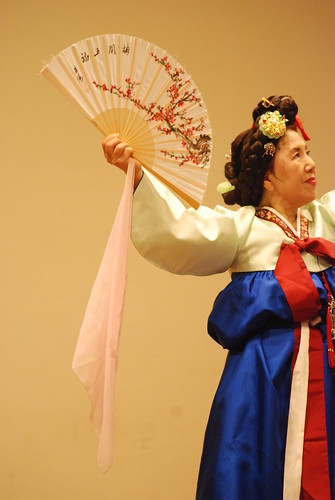
I felt fortunate for the opportunity to see these heartfelt performances from the Greenmount Senior Center Dance Team.

20th Annual Literacy Celebration

Without meeting them in person, it's hard to convey just how strong the tutor-learner bond can be.  Seeing tutors speak about their learners—and vice versa—brought home to me how much these pairs become like family, completely invested in reaching a shared goal.

20th Annual Literacy Celebration

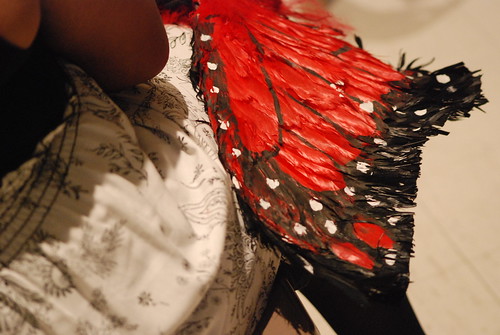
The first photo doesn't do it justice, so I just have to highlight the butterfly wings learner Ruby used to represent the changes she's undergone in her life since coming to the Literacy Program.

20th Annual Literacy Celebration

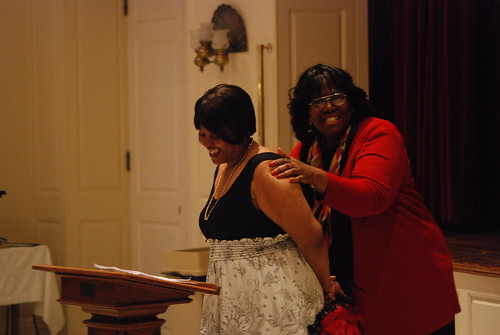
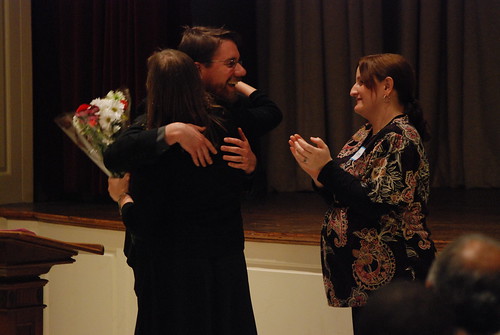
Our VISTA members have shared a lot of stories on this blog lately, but sometimes we forget how much impact they have on our staff.  Here, Special Literacy Projects VISTA Cyndel Taylor (shown receiving flowers) receives a big thank you from Program Director Todd Elliott and Assistant Director Kim Bosworth.

To see more photos from the evening, check out our albums on Facebook or Flickr.

Thursday, May 20, 2010

VISTA: A Legacy of Service

Throughout April, we heard a number of stories from current and former AmeriCorps*VISTA members.  VISTA is a national service program dedicated to eradicating poverty in the United States.  VISTA members sign on for a year of full-time service, receiving a modest stipend to offset the basic costs of living.  Here, GHCC's VISTA Supervisor shares what he learned from his recent experience at a reception for the 45th anniversary of VISTA in Washington, DC.

We are still recruiting VISTA members to serve at GHCC beginning this August!  If you would like to serve, visit our website for details.

Submitted by Tyson Smith.

I’ve served as GHCC’s VISTA Supervisor for about 18 months now.  Although my role is pretty administrative—managing paperwork, attending meetings and so on—I have developed a real affinity for the AmeriCorps*VISTA mission.  There’s something really inspiring about national service, and even though I’ve never taken my turn to serve the country in this way, I’m glad I’m in a position at GHCC where I can support the individuals who are serving.  That’s why, when I received an invitation to attend a reception for the 45th Anniversary of VISTA in Washington, DC, I gladly accepted.

At the reception, officials from the Corporation for National and Community Service (CNCS)—the government entity that runs VISTA—including CEO Patrick Corvington and Acting Director Paul Davis, thanked former VISTA members and praised the spirit and national impact of VISTA over the past four and a half decades.  Hyepin Im, of the CNCS Board of Directors, spoke about VISTA members in recent years whose work had garnered millions of dollars to support impoverished families and communities impacted by the housing market collapse and economic crisis.  Clearly, VISTA has become an integral part of our nation’s strategy for fighting poverty on many levels.

What I found most impactful, though, were the stories shared by three guests of honor who have had a lifetime of experience with VISTA.  Lynda Robb, daughter of Former President Lyndon Baines Johnson, spoke about the day her father launched the VISTA program and the lunch she attended with the very first group of 20 VISTA members. 

Senator Jay Rockefeller from West Virginia spoke about his year of VISTA service over 40 years ago in the Appalachian Mountains, and of the great impact that experience had on the course of his life. 

Maybe most impressive was the story that Representative Gwen Moore from Wisconsin shared.  Rep. Moore was a single mother living on welfare in Milwaukee when her neighborhood applied for VISTA funds to establish a credit union in their community.  She was encouraged to work on that project as a VISTA member, and as a result Rep. Moore became very well educated about finance, lending and other money matters.  Rep. Moore was honored as the VISTA of the Decade for 1976-1986.  Years later, she is sitting on the House Finance Committee. 

Sometimes we think of VISTA as a means to an end: to build a program, to address an issue, to fill a need.  What I learned last Wednesday was that VISTA is much more than an opportunity.  VISTA is a legacy of service.  It can change the course of lives.  VISTA is an incredible way to make a difference in the country, and in one’s self.  I am honored to be a part of this movement and I am so excited to share this experience with the lucky 10 individuals who will join GHCC’s new VISTA team this fall.

Monday, May 17, 2010

Neighborhood Walkers: Building Community & Fighting Crime

Citizens on Patrol (COP) groups are a great way to socialize with your neighbors, learn more about your neighborhood, and promote a sense of solidarity in your community.  COP walkers meet on a regular basis to walk through their neighborhood together, giving neighbors a friendly hello and making a note of anything in need of repair or attention.  Walkers keep an eye out for potential code violations, sanitation problems, vacant homes, abandoned vehicles, and more.


Want to know more about how a COP group can get started in your community?  GHCC is hosting a Citizens on Patrol and Neighborhood Walkers workshop on Thursday, May 27.  Join neighborhood walkers and Northern District Police officers at 7:00 p.m. at our offices at 3503 N. Charles Street to find out how to start a group of your own.  Click here for a printable flyer.


Here, Joe Stewart -- one of the residents who started Walking Waverly -- shares a little bit about his experience.

Walking Waverly came out of a meeting of Better Waverly Community Organization’s Quality of Life Committee a few years ago. Nameless at the conception, it began as a suggestion that committee members go outside and see how things were going on warm evenings, when residents gathered on corners, porches, sidewalks, and yards in response to complaints about inconsiderate behavior interfering with others’ peace and quiet.

Here would be a chance to observe what was happening. Maybe it would serve to calm things down.  At the very least, it would demonstrate representatives of the community organization were taking an active interest in matters at the block level.  Notice went out after picking a date, time and location to launch a stroll through the neighborhood.

Launched like a trial balloon on a Wednesday one spring evening by a few residents, Walking Waverly took on a life of its own. Before long, police officers from Northern District, City Councilwoman Mary Pat Clarke, and representatives from various city agencies were tagging along. Walkers greeted whoever was outside, introducing guests from the city to residents on their blocks.

Walkers brought their dogs along. New neighbors joined and learned things about the neighborhood they didn’t know. It was rewarding to be strolling with others, visiting and viewing the neighborhood together in each of the four seasons, with holiday decorations or different flowers in bloom. The commercial corridor was intentionally included. This allowed walkers to interact with merchants and to enjoy the shop window displays.

When it started getting darker, a decision was made to walk an hour earlier during fall and winter months.

What made it work? Leaders showing up regularly, posting ongoing notices, sticking to a schedule rain or shine, sleet or snow, and promoting special guest walks all helped.

What made it safe? Being a neighborly stroll where everyone along the way got greeted, not being confrontational or assuming responsibilities belonging to the police, and having “Walking Waverly” embroidered caps for those who wished to wear them.

Challenges we faced? It is continually difficult getting residents involved in community activities. Chapters could be written speculating why that is. However, it is important to remember a few dedicated people can make a difference and as long as participants remain neighborly, upbeat and willing to show up, Walking Waverly will serve a role in the community.

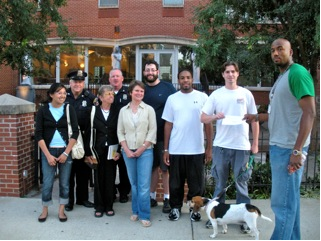
Walking Waverly